
Why Movement is the Brain's First Language: The Science of Learning

Updated: Feb 1
The Puzzle That Changed Everything
You're sitting at the kitchen table. Your child is trying to put together a simple puzzle, just six pieces. You've watched them do harder things before.
But today, the pieces won't cooperate. Their hand hovers, uncertain. They rotate a piece the wrong way. Again. Frustration builds. Tears follow.
You wonder: Why is this so hard?
Here's what no one told you: this isn't about the puzzle. It's not about focus, effort, or intelligence. It's about how your child's brain is organizing information, and movement is the missing piece.
If your child struggles with tasks that seem "simple" to others, you're not alone. And there's a reason rooted in neuroscience that explains everything.
What's Really Happening: The Brain Learns Through the Body
For decades, we thought of the brain as a computer sitting in the head, separate from the body. But modern neuroscience tells a different story.
The brain and body are one learning system.
This concept is called embodied cognition. It means that thinking, learning, and problem-solving aren't just mental activities, they're physical ones. The brain builds its understanding of the world through movement, touch, and spatial experience.
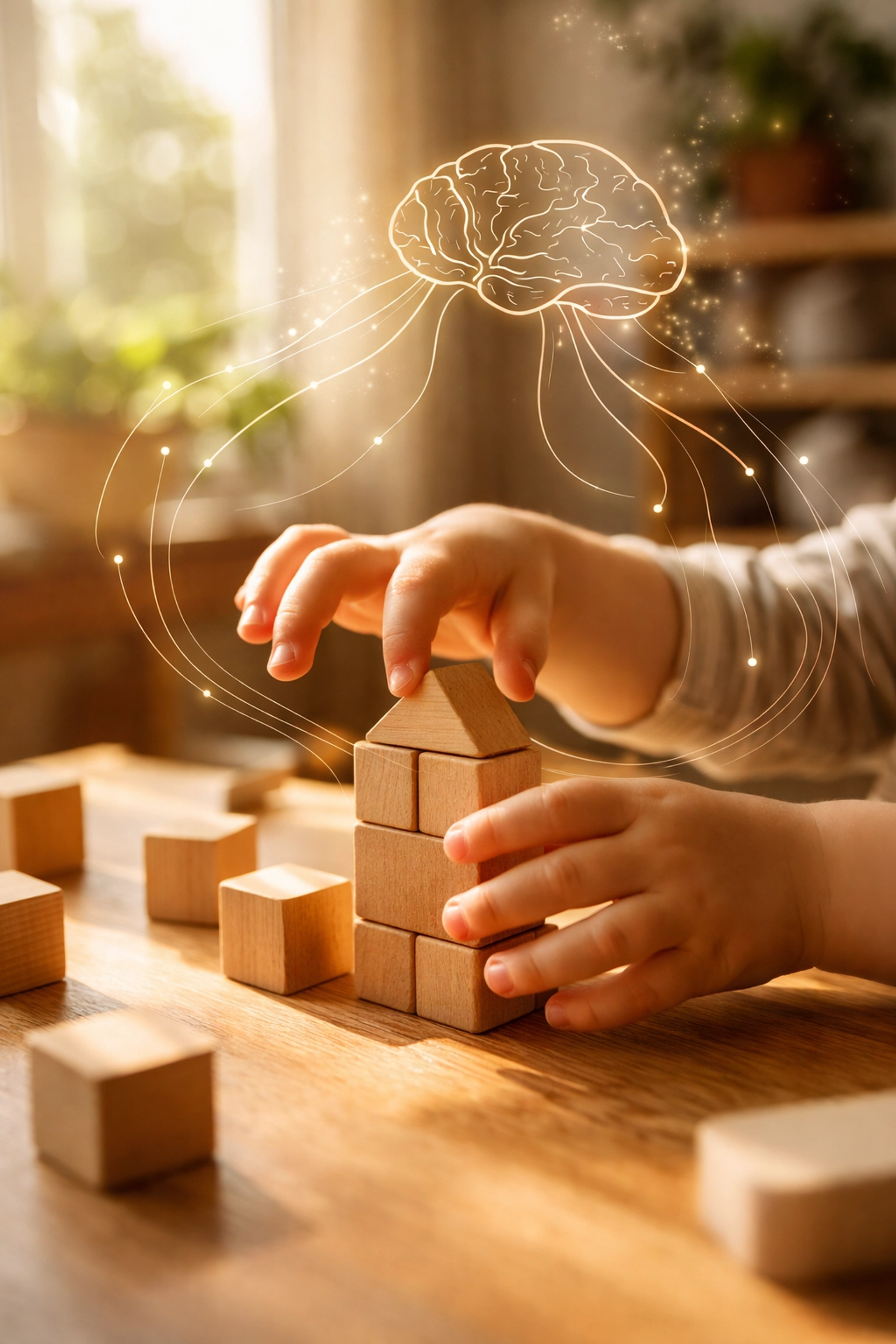
Here's something fascinating: the cerebellum, the brain region that controls movement and coordination, is also deeply involved in language processing and learning. Research has found that this area responds selectively when we read or listen to words, showing that movement and cognition share the same neural pathways.
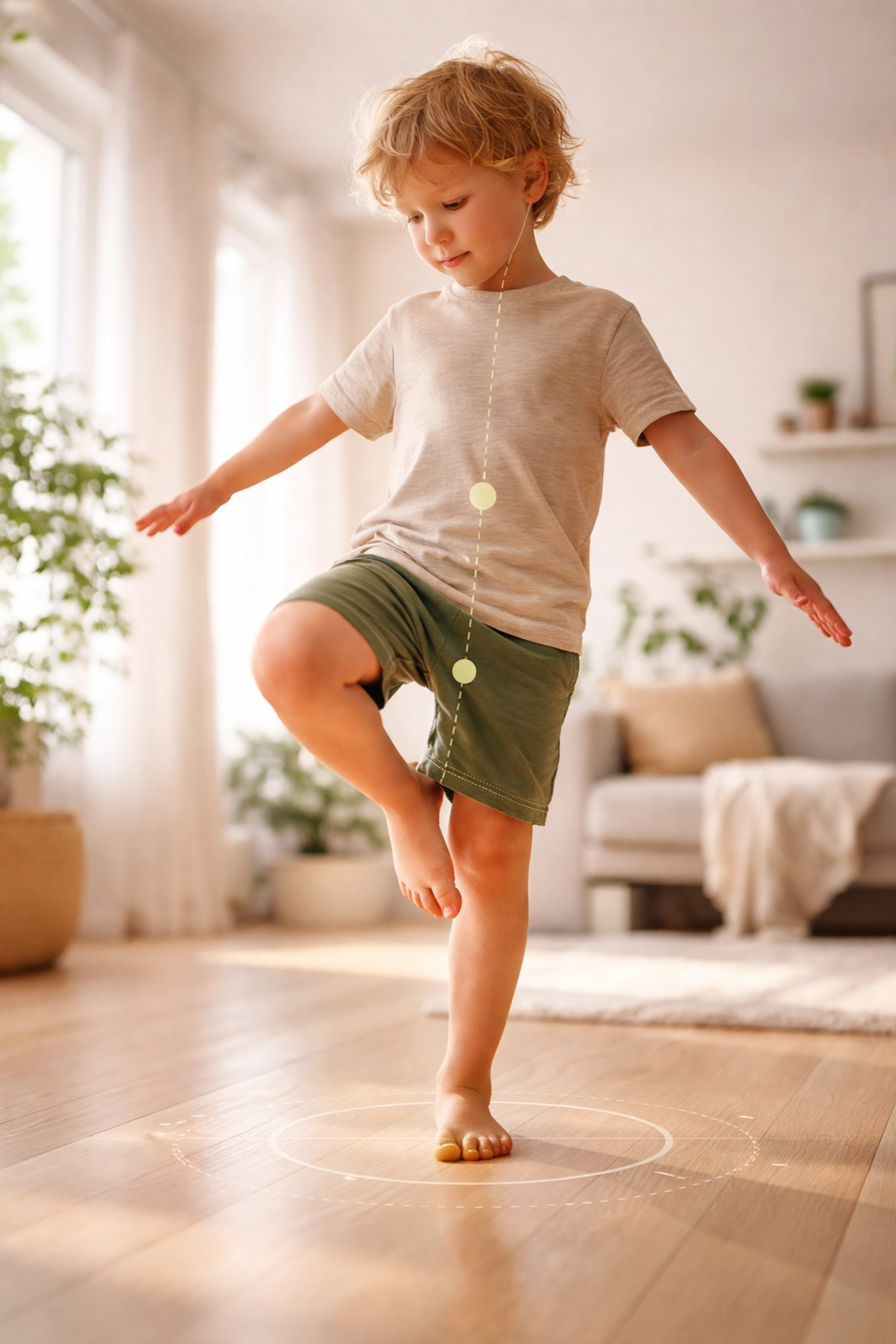
For children with learning disabilities, autism, ADHD, or developmental delays, these pathways may need more support to develop fully. The body's "map", how the brain perceives where the body is in space, might be incomplete or unclear.
When that internal map is fuzzy, everything becomes harder: puzzles, buttons, handwriting, following directions, even sitting still.
This isn't a flaw. It's simply the brain asking for more information, through movement.
What You Might Notice
Every child is different, but here are some signs that movement-based brain organization could use support:
Clumsiness or awkward coordination, bumping into things, difficulty with stairs
Trouble with focus, not because they don't want to pay attention, but because their body feels "lost" in space
Difficulty following multi-step directions, the brain can't sequence without a clear spatial reference
Spatial confusion, reversing letters, struggling with puzzles, misjudging distances
Sensory seeking or avoiding, the nervous system trying to "find itself"
Frustration with fine motor tasks, buttons, zippers, pencil grip
If this sounds familiar, take a breath. These aren't permanent limitations. The brain is remarkably plastic, especially in childhood. With the right input, it can reorganize and grow.
What Helps: Three Principles from NeuroMovement®
NeuroMovement®, developed by Anat Baniel and rooted in the work of Dr. Moshe Feldenkrais, offers a gentle, brain-based approach that helps children build clearer body maps and stronger neural connections.
Here are three core principles that can transform how your child learns:
1. Movement with Attention
Movement alone isn't enough. The magic happens when movement is paired with attention.
When a child moves slowly and notices what they're doing, how their arm feels, where their weight shifts, the brain receives rich, detailed information. This is what creates new neural pathways.
Random, fast, or automatic movement doesn't teach the brain much. But mindful, curious movement is like a software upgrade.
2. Slow
Speed is the enemy of learning.
When we slow down, the brain has time to perceive differences, and perceiving differences is the foundation of all learning. Fast movement overwhelms the system. Slow movement invites the brain to pay attention and integrate.
This is especially important for children with special needs. Slowing down isn't "dumbing down." It's giving the brain the time it needs to organize.
3. Variation
The brain thrives on novelty. Doing the same thing the same way over and over doesn't build new connections, it reinforces old patterns.
But when we introduce small variations, a different angle, a lighter touch, a new direction, the brain wakes up. It starts problem-solving, comparing, adapting.
Variation is how the brain discovers new possibilities.
Try This Today: Toe-Mapping Brain Wake-Up
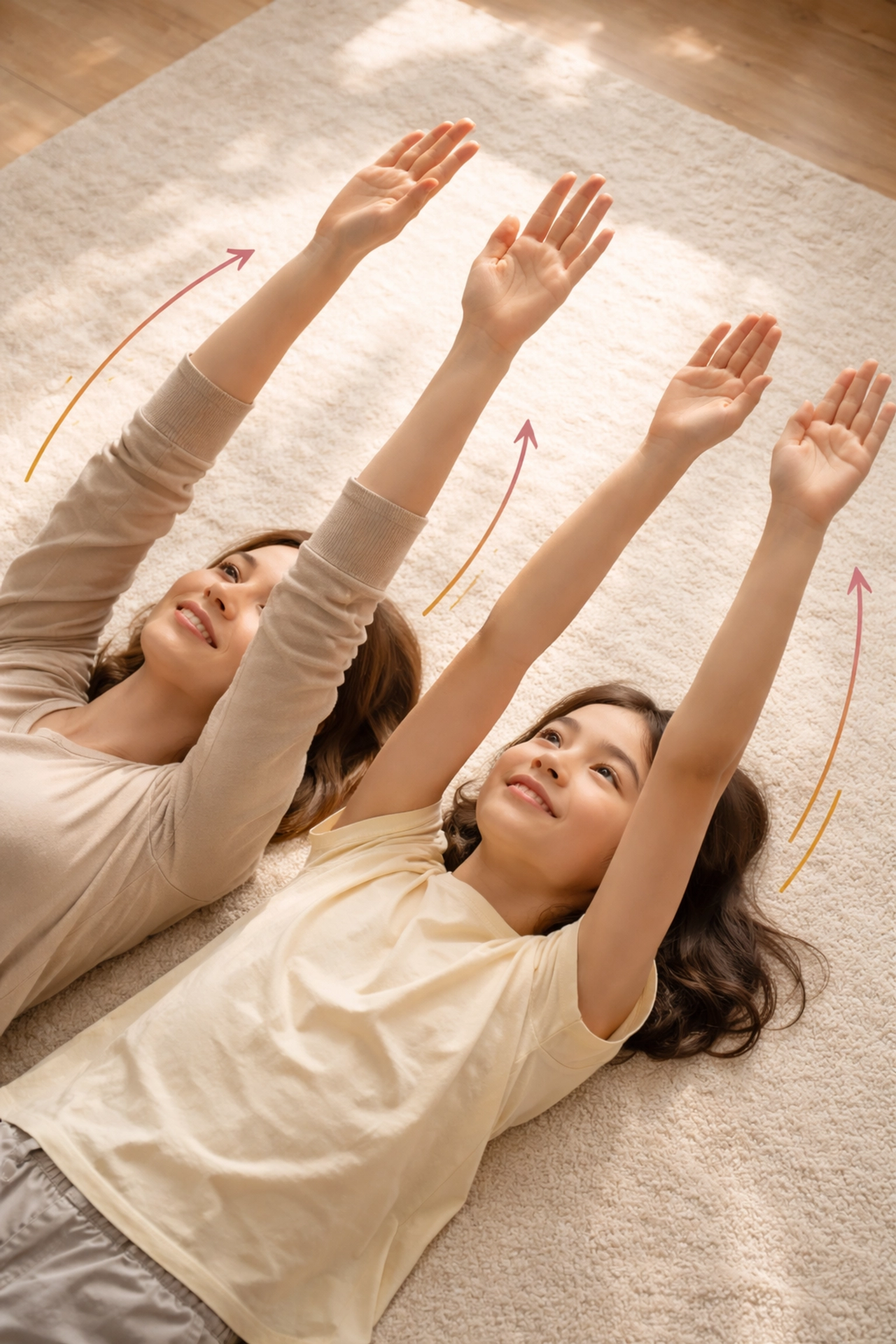
Here’s a gentle 2-minute practice that can be surprisingly powerful for grounding and balance. It helps build proprioception (your child’s sense of where their body is in space) by giving the brain clearer information from the feet.
You’ll need: A quiet moment, a cozy spot, and your child’s permission (you can also try it on yourself first).
Step 1: Find a Quiet, Cozy Spot
Have your child sit or lie down somewhere comfortable, like on the couch, a bed, or a soft rug. Warm hands help, so you can rub your palms together first.
Step 2: Gently Tug Each Toe—One by One, Very Slowly
Hold one foot with support. Then, starting with the big toe, gently tug the toe outward (like a tiny lengthening), then soften and release.
Go toe-by-toe, taking your time. Slow is what gives the brain “high-quality” information.
Step 3: Add a Tiny, Gentle Twist
For each toe, add a small, gentle twist (one direction and then the other), like you’re turning a dial just a few millimeters.
Keep it light. No forcing, no stretching. Think “curious” instead of “correct.”
Step 4: Pause and Notice What Feels Clearer
After you’ve done all five toes, pause and ask (or simply notice together):
Does one toe feel clearer, warmer, or more “there” than the others?
Does that foot feel different from the other foot?
Do they feel more grounded through that side?
Why this works: The brain relies on “maps” of the body to organize movement. When the feet are mapped more clearly, the brain often has an easier time coordinating balance, posture, and grounding. It’s a small input that can create a big shift in how the whole system organizes itself.
The Science of Hope
Research shows that people who learn while moving learn up to 20% faster, because movement stimulates neurogenesis: the creation of new brain cells. Learning literally reshapes the brain, increasing gray and white matter and strengthening communication between regions.
This is called neuroplasticity, and it's why gentle, movement-based approaches like NeuroMovement in Montreal can make such a profound difference for children with learning disabilities, autism, genetic conditions, and developmental delays.
Your child's brain is not fixed. It's waiting for the right kind of input.
A Gentle Reminder
If any movement or practice increases your child's distress, pause. Return to safety. Trust your instincts, and consider reaching out for professional support when needed.
Ready to Learn More?
Download our free Movement Game Card to try more brain-building activities at home: [FREEBIE LINK]
If you're curious about how NeuroMovement can support your child's unique brain, we'd love to connect. Book a free discovery call and let's explore what's possible together.
You're not alone in this. And your child's potential is waiting to unfold.
Comments