
Stop the Drills: Why Information Beats Stimulation for Learning (Myth #1)
If you've spent time in therapy rooms, you've probably seen it: the same exercise, repeated over and over. Ten leg lifts. Twenty arm reaches. Endless reps of the same movement, day after day, week after week. And maybe you've wondered: Is this really working? My child seems to zone out halfway through.
You're not imagining it. And you're definitely not alone.
This week, we're busting the first myth in our 4-part series: the belief that repetition creates learning. It's one of the most pervasive ideas in traditional therapy, and it's also one of the most misunderstood. Because here's the truth: your child's brain doesn't crave repetition. It craves information.
The Repetition Trap
We've been told for years that practice makes perfect. Do something 100 times, and it'll stick. Drill it in. Muscle memory will kick in. But when it comes to the developing brain: especially for children with special needs: this approach often backfires.
Why? Because repetition without variation is just noise.
Think about it: when you hear the same sound over and over, you stop noticing it. The air conditioner hums in the background, and within minutes, your brain tunes it out. The same thing happens with movement. When a child repeats the exact same motion in the exact same way, the brain learns to ignore it. There's no new information coming in, so there's nothing to organize, nothing to map, nothing to learn.
This is what I call stimulation: lots of activity, but very little substance.
What Your Child's Brain Really Needs
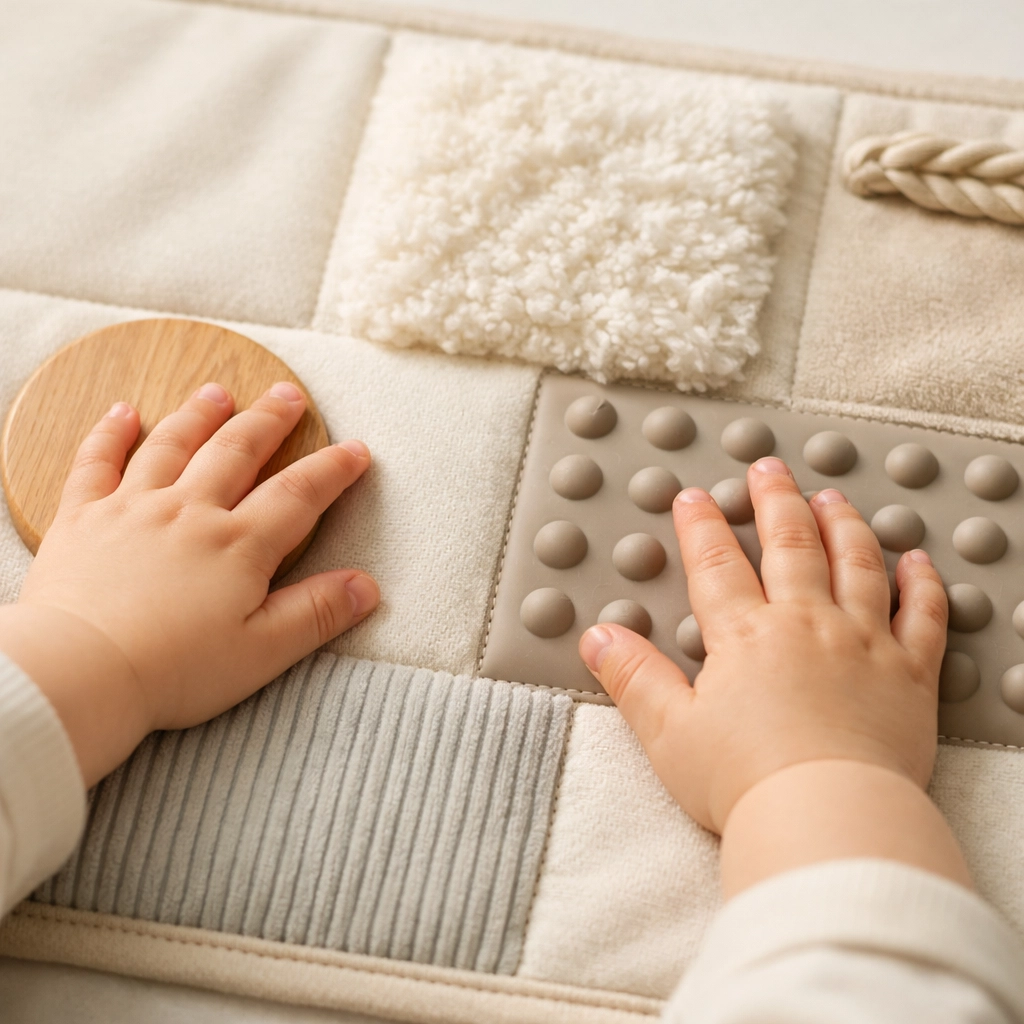
The brain is a pattern-recognition machine. It thrives on differences. It needs to feel contrast, notice subtlety, and perceive variation in order to create new neural pathways.
This is where information comes in.
Instead of doing a movement ten times quickly, what if you did it once: very slowly: with your child's full attention? What if you introduced tiny variations each time? A slightly different angle. A softer touch. A pause to notice what the elbow is doing, or how the shoulder blade moves.
Suddenly, the brain wakes up. It has something to work with. It can map the movement, refine it, and integrate it into the child's growing sense of their body.
This is the foundation of the Anat Baniel Method and NeuroMovement®: learning happens when the brain receives high-quality information, not high-volume stimulation.
The Science of Novelty and Variation
Neuroscientist Dr. Michael Merzenich, a pioneer in brain plasticity research, found that the brain physically reorganizes itself in response to new experiences. But here's the key: it doesn't reorganize from repetition. It reorganizes from novelty, attention, and reward.
When a child is engaged: when they're noticing differences and paying attention to what they're doing: the brain releases neurochemicals that strengthen new connections. This is neuroplasticity in action.
But when a child is bored, checked out, or crying through a drill? The brain isn't learning. It's coping.
This is why so many parents feel frustrated after months of traditional therapy. The exercises aren't necessarily wrong, but they're often delivered in a way that the brain can't use.
From Drills to Discovery
Let's look at a real example.
I once worked with a mother whose daughter had cerebral palsy. She'd been prescribed daily leg stretches and endless "reflex integration" exercises: dozens of reps, every single day. Her daughter would cry. Mom would power through, feeling like a failure when progress stalled.
When we switched approaches, everything changed.
Instead of stretching the leg repeatedly, we explored how the hip could move: tiny, gentle circles, done slowly and with curiosity. We paid attention to where the movement started, how it rippled through the leg, what the foot was doing.
Within minutes, the spasticity softened. The child moved her leg independently for the first time. She reached for her own toes: something she'd never done before.
The mom's eyes filled with tears. "I thought we just needed to do it more," she said.
But it wasn't about more. It was about better.

Try This at Home
You don't need special equipment or a therapy background to start giving your child's brain better information. Here's a simple shift you can make today:
Next time you're working on a movement with your child: reaching for a toy, lifting a leg, even saying a word: try this:
Do it once, incredibly slowly. Not ten times fast. Just once, with full attention.
Add variation. Change the angle slightly. Use a softer touch. Pause halfway and ask, "Can you feel your elbow bending?"
Let them feel it. This isn't about getting the movement "right." It's about noticing what's happening in their body.
Exaggerate. Make the movement bigger, or smaller, or in a different direction. Let the brain experience contrast.
This gives the nervous system high-quality information instead of noisy stimulation.
You might be surprised how much more engaged your child becomes: and how quickly you see shifts.
The Beauty of "Less is More"
One of the hardest things for parents to accept is that doing less can actually lead to more learning.
We've been conditioned to believe that effort equals results. More reps, more therapy hours, more intervention. But the brain doesn't work that way.
Your child's brain is brilliant. It's a learning machine, not a computer that needs data entry. It doesn't need to be drilled or forced. It needs to be invited, engaged, and given the information it craves to grow.
When you slow down, add variation, and bring attention to movement, you're not lowering the bar. You're raising the quality of the input. You're working with the brain's natural design, not against it.
What's Next in This Series
This is just the first myth we're busting. Over the next three weeks, we'll tackle:
Each of these beliefs holds parents: and kids: back from the breakthroughs that are possible.
You Don't Have to Do This Alone
If you're feeling stuck in the "repetition loop," exhausted from therapies that aren't working, or simply searching for a gentler, brain-based approach, I'd love to talk.
I'm opening up 3 spots for free discovery calls this month. We'll explore where your child is now, what's not working, and how NeuroMovement® might offer a different path forward.
Your child's brain isn't broken. It's just waiting for the right kind of information.
Warm hugs, Joana
Comments