
Is Your Child's Brain Too "Noisy" to Learn?

You've said the same instruction three times. Your child is looking right at you, but it's like your words are bouncing off an invisible wall. You can see their frustration building. You can feel your own patience fraying. And the worst part? You know they're not being defiant. Something else is going on.
Here's what might be happening: their brain is too "noisy" to hear you.
The Radio Static in Your Child's Brain
Imagine trying to listen to your favorite song on the radio, but the signal keeps cutting in and out. Static. Crackling. Random bursts of noise. You can catch a word here, a note there, but you can't make sense of the whole thing. Frustrating, right?
That's what's happening inside your child's brain when they're experiencing sensory overload.
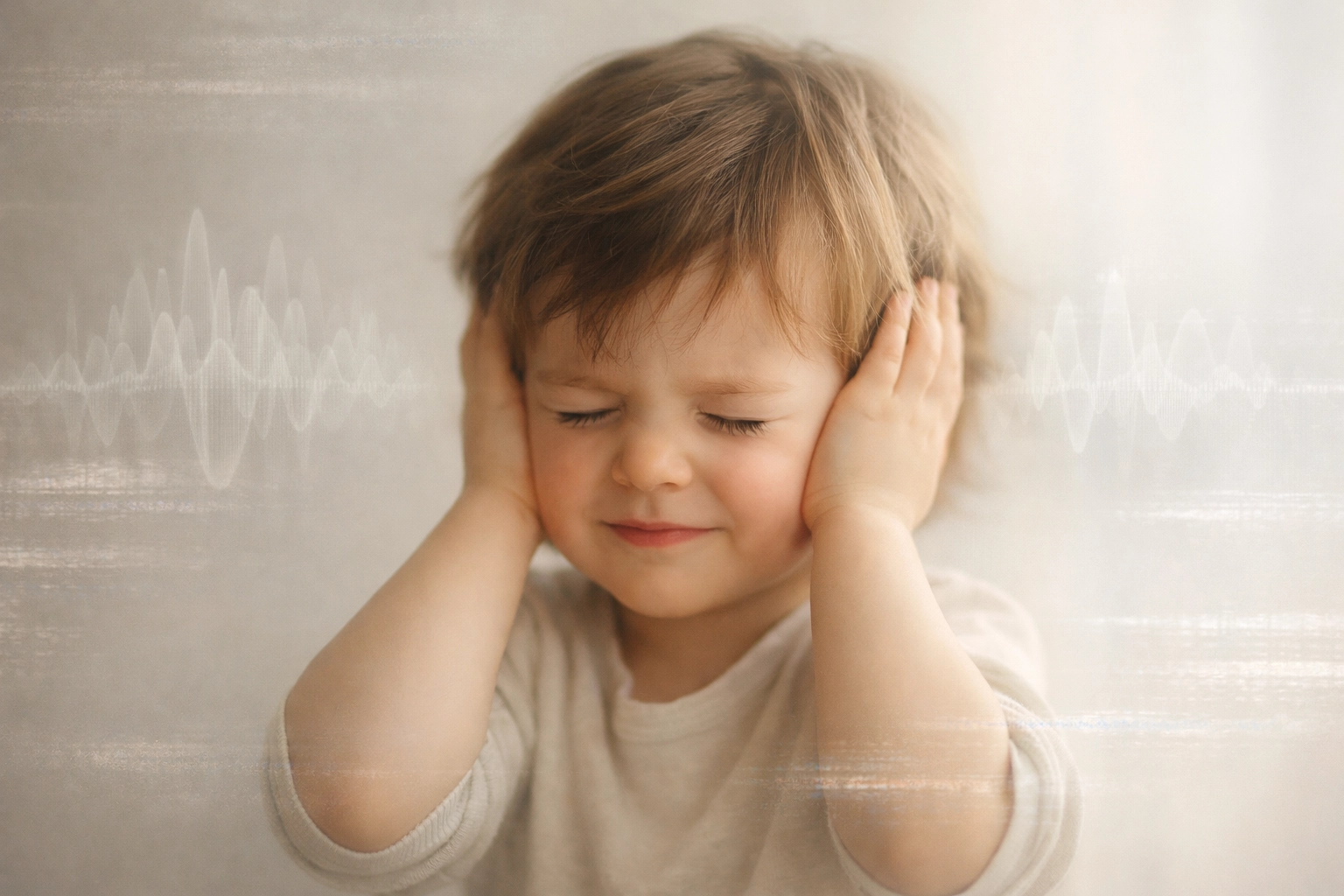
When a child's nervous system is overwhelmed: by sounds, lights, textures, emotions, transitions, or even just the accumulated stress of the day: their brain fills with what neuroscientists call "neural noise." It's not that they're ignoring you or choosing not to listen. Their brain literally can't process the "signal" (your instructions, the lesson, the conversation) through all that internal static.
And here's the kicker: you can't learn when your brain is full of noise.
The Signs Your Child's Brain Is Overloaded
So how do you know if your child's brain is "too noisy"? Here are some telltale signs:
They seem "checked out" even when they're looking at you. Their eyes might be on you, but their brain is working overtime just to regulate their internal state. There's no processing power left for your words.
Meltdowns seem to come "out of nowhere." One minute they're fine, the next they're in full meltdown mode. But it wasn't out of nowhere: their system was quietly accumulating "noise" until it overflowed.
Transitions are a nightmare. Getting in the car seat, leaving the park, switching activities: these moments require the brain to reorganize. When there's already too much internal noise, transitions feel impossible.
Repetition doesn't help. You've practiced the same skill a hundred times, but they still can't do it consistently. That's because practice requires a calm, organized nervous system. When the brain is noisy, repetition just adds more static.
They can't regulate their body. Fidgeting, spinning, crashing into things, or going completely still and "frozen." These are all signs their nervous system is trying desperately to find regulation through all that noise.
Why Does This Happen?
Let's break down the science in a way that makes sense.
Research shows that chronic background noise: whether it's environmental (traffic, classroom chatter, household sounds) or internal (sensory processing challenges, emotional overwhelm): creates what scientists call "neural noise." Basically, the brain's neurons start firing spontaneously, even when there's nothing to process. This reduces the brain's sensitivity and slows down its ability to organize information.
For children with special needs: especially those with sensory processing differences, autism, ADHD, or auditory processing challenges: this "noise" is amplified. Their brains have a harder time filtering out irrelevant information. Everything feels important. Everything demands attention. And the result? Cognitive overload.
Studies have found that noise exposure impairs:
Reading comprehension
Memory and executive function
Attention and focus
Following instructions
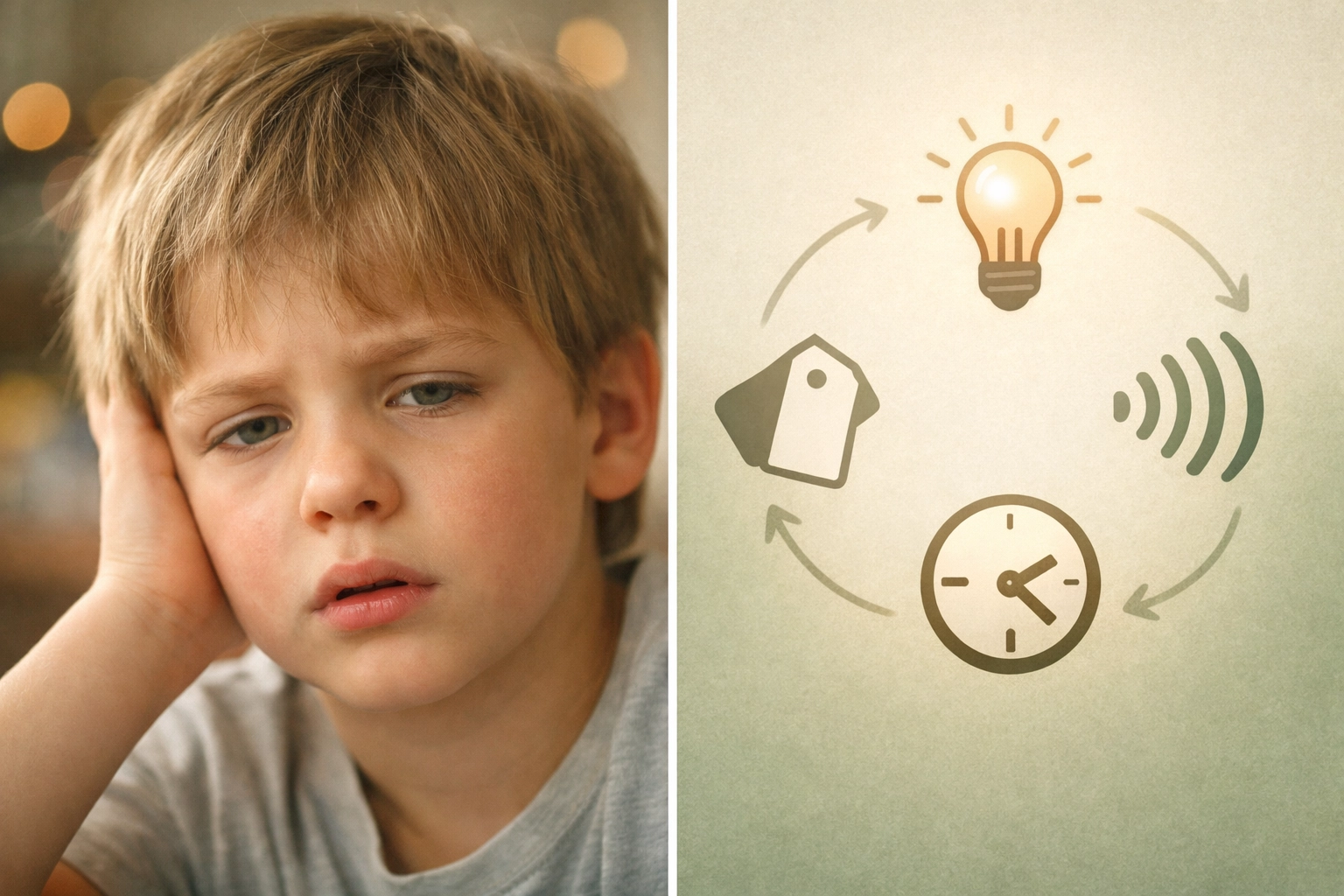
But here's what most people don't realize: it's not just external noise that causes this. Internal sensory "noise": the feeling of tags on clothing, the hum of fluorescent lights, the texture of food, the unpredictability of a new routine: can be just as overwhelming.
When a child's brain is full of this noise, their stress response kicks in. Cortisol levels rise. The brain shifts into survival mode. And in survival mode, learning is not a priority. Safety is.
What Happens to Learning When the Brain Is Noisy
Here's the truth: learning requires a calm, organized nervous system.
Think of it this way. Your child's brain has a "learning switch." When their nervous system feels safe and organized, the switch is ON. They can absorb new information, practice new skills, and respond to your guidance.
But when their brain is full of noise: when they're in sensory overload or emotional overwhelm: the switch flips OFF. It doesn't matter how many times you repeat the instruction or how engaging the activity is. Their brain simply isn't available for learning.
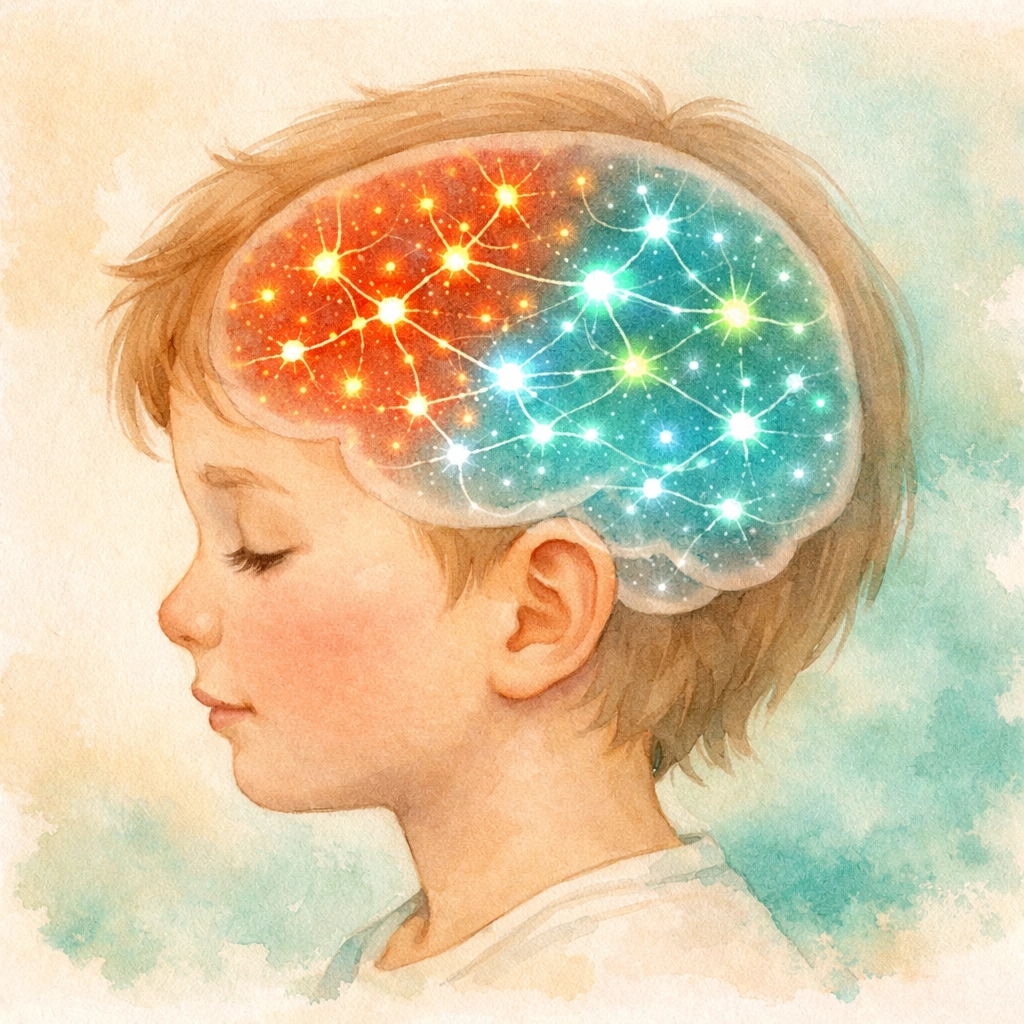
This is why you might see such inconsistency. One day they can do something beautifully. The next day, it's like they've never seen it before. It's not regression. It's not stubbornness. Their brain was organized yesterday, and today it's overloaded.
The good news? You can help clear the noise.
How Gentle Movement Clears the Static
This is where NeuroMovement® comes in: and why it works so differently than traditional therapy approaches.
Instead of adding more noise (more instructions, more repetitions, more "try harder"), NeuroMovement® helps the brain organize itself through gentle, varied, exploratory movement.
Here's how it works:
Slow, gentle movement calms the nervous system. When we move quickly or forcefully, the brain can interpret that as stress. But when we move slowly and gently, the nervous system gets the message: "We're safe. We can relax." The static starts to fade.
Variation gives the brain new information. When a child repeats the same movement over and over, the brain tunes it out (more noise). But when we introduce subtle variations: moving a little slower, trying a different angle, noticing a new sensation: the brain wakes up. It starts organizing. The noise clears.
Attention and awareness create clarity. When we guide a child to notice what they're feeling and experiencing (without judgment or pressure), their brain shifts from reactive mode to learning mode. Suddenly, the signal comes through clearly.
You can learn more about why movement is the brain's first language here.

What You Can Do Right Now
You don't need to wait for a specialist appointment or add another therapy to your schedule. There are small, gentle things you can do today to help clear the noise in your child's brain.
That's why we created the "Noisy Brain Reset": a simple, 1-page guide with quick, brain-calming strategies you can use during transitions, meltdowns, or anytime your child seems "unreachable."
These aren't complicated exercises or time-consuming routines. They're tiny, powerful moments that help your child's nervous system find calm and clarity again.
Inside the Noisy Brain Reset, you'll find:
The 2-minute "static clearing" technique you can use anywhere
How to recognize when your child's brain is overloaded (before the meltdown)
Simple sensory strategies that work in the car, at bedtime, or during transitions
The "connection-first" script to use when your child can't hear you
Because here's the truth: you're not failing. Their nervous system is just flooded. And with the right tools, you can help them find their way back to calm.
You're Not Alone in This
Parenting a child with special needs is exhausting. You're doing more therapy, more advocating, more researching than most parents will ever have to do. And on top of all that, you're supposed to stay calm and regulated yourself.
We get it. That's why we're here.
At NeuroSomatic Kids, we specialize in helping children with complex needs find regulation, connection, and progress: not through force or repetition, but through gentle, brain-based movement that clears the noise and flips the learning switch back ON.
If you're tired of waiting lists, tired of approaches that don't seem to work, and ready to try something that honors your child's nervous system, we'd love to support you.

Ready to clear the noise?Book a free call and let’s talk about what’s been feeling hardest lately, and what support could look like for your child.
Or, if you'd like to explore how NeuroMovement® could support your child's unique journey, book a free discovery call with us. Let's talk about what's possible when we work with the brain, not against it.
You've got this. And we've got you.
Comments